Your brain's electrical patterns can be retrained for calm.
Anxiety and depression often have a visible biological basis in brainwave activity. We use qEEG mapping to identify the specific imbalances driving your symptoms and neurofeedback to help restore regulation.
Targeted relief
Specific brainwave imbalances

It is not just in your head. It shows up in your brainwaves.
Anxiety frequently appears as excessive high-frequency Beta waves, indicating a brain that is permanently on high alert. Depression can present as too much slow Alpha activity in the left frontal lobe, making it difficult to feel motivation or joy.
qEEG Brain Mapping makes these patterns visible. Instead of guessing, we use objective data to guide neurofeedback therapy designed to reshape how your brain functions at the source.
Targeted Relief
Focusing on the specific brainwave imbalances driving your symptoms.
Sustained Calm
Building long-term self-regulation skills, not just symptom management.
Mood disorders can manifest in many ways.
Our goal is to help your brain find its way back to natural balance and regulation.
Anxiety
- Racing Thoughts
- Panic Attacks
- Social Phobia
- Chronic Stress
Depression
- Low Energy
- Loss of Interest
- Sleep Disturbances
- Persistent Sadness
Daily Life
- Executive Dysfunction
- Irritability
- Brain Fog
- Overwhelm
qEEG turns clinical theory into visible, actionable data.
Patients frequently report a profound sense of relief when their struggle is validated by the brain map. The data replaces guesswork with a precise roadmap for treatment.
Anxiety Map
Shows hot-spots of high-frequency Beta waves, indicating a brain that cannot turn off.
Depression Map
Shows imbalances in slower Alpha frequencies, correlating with low mood and fatigue.
Why choose neurofeedback for anxiety and depression.
Unlike medication that manages symptoms while active, neurofeedback is designed to support lasting neural change, addressing the patterns at their source.
Drug-Free and Non-Invasive
Neurofeedback uses your own brain's signals to teach it how to function more efficiently. Nothing enters your body.
Long-Lasting Results
Neurofeedback strengthens neural pathways for lasting change. Benefits are designed to persist after treatment ends.
Customized to Your Brain
Every session is built on your specific qEEG data. Your brain is unique, and your treatment plan should reflect that.
Complementary to Therapy
Neurofeedback works well alongside counseling or EMDR, helping you stay grounded enough to do deeper psychological work.
Stop managing symptoms. Start retraining your brain.
Our intake team will help you understand what a brain map and neurofeedback protocol could look like for your specific situation.
Why does anxiety show up on a brain map?
When your brain is in a state of chronic anxiety, it tends to produce an excess of high-frequency Beta waves — the electrical patterns associated with alertness and rapid thinking. Under normal circumstances, Beta activity is useful. But when the brain cannot shift out of that mode, the result is a nervous system stuck on high alert: racing thoughts, difficulty sleeping, and a persistent sense of dread even when nothing is objectively wrong.
Depression often presents a different signature: too much slow-wave Alpha activity concentrated in the left frontal lobe, an area associated with motivation, reward processing, and positive emotion. This pattern correlates with the withdrawal, low energy, and anhedonia that many people describe as the hallmark of depression.
A qEEG brain map makes these patterns visible. Rather than treating anxiety or depression as a black-box diagnosis, we can see exactly which frequencies are dysregulated and design a neurofeedback protocol aimed at restoring balance.
What the research says
The scientific literature on neurofeedback for anxiety and mood disorders spans more than two decades. A 2005 review by D. Corydon Hammond, PhD, published in Child and Adolescent Psychiatric Clinics of North America, examined the evidence base for neurofeedback in anxiety and affective disorders. The review noted particularly strong support for anxiety, with research suggesting that training toward Alpha enhancement and Beta reduction produced meaningful reductions in self-reported anxiety and physiological stress markers. Hammond, 2005 (PubMed)
Because every person's brainwave profile is different, the protocols used at Neuron Connect are built from your individual qEEG data rather than a standardized template. For a deeper look at how brain mapping informs anxiety care, read our post on leveraging brain mapping in anxiety treatment.
As with all emerging therapies, individual outcomes vary. The study cited here reflects published research and is not a guarantee of specific results.
What a typical protocol looks like
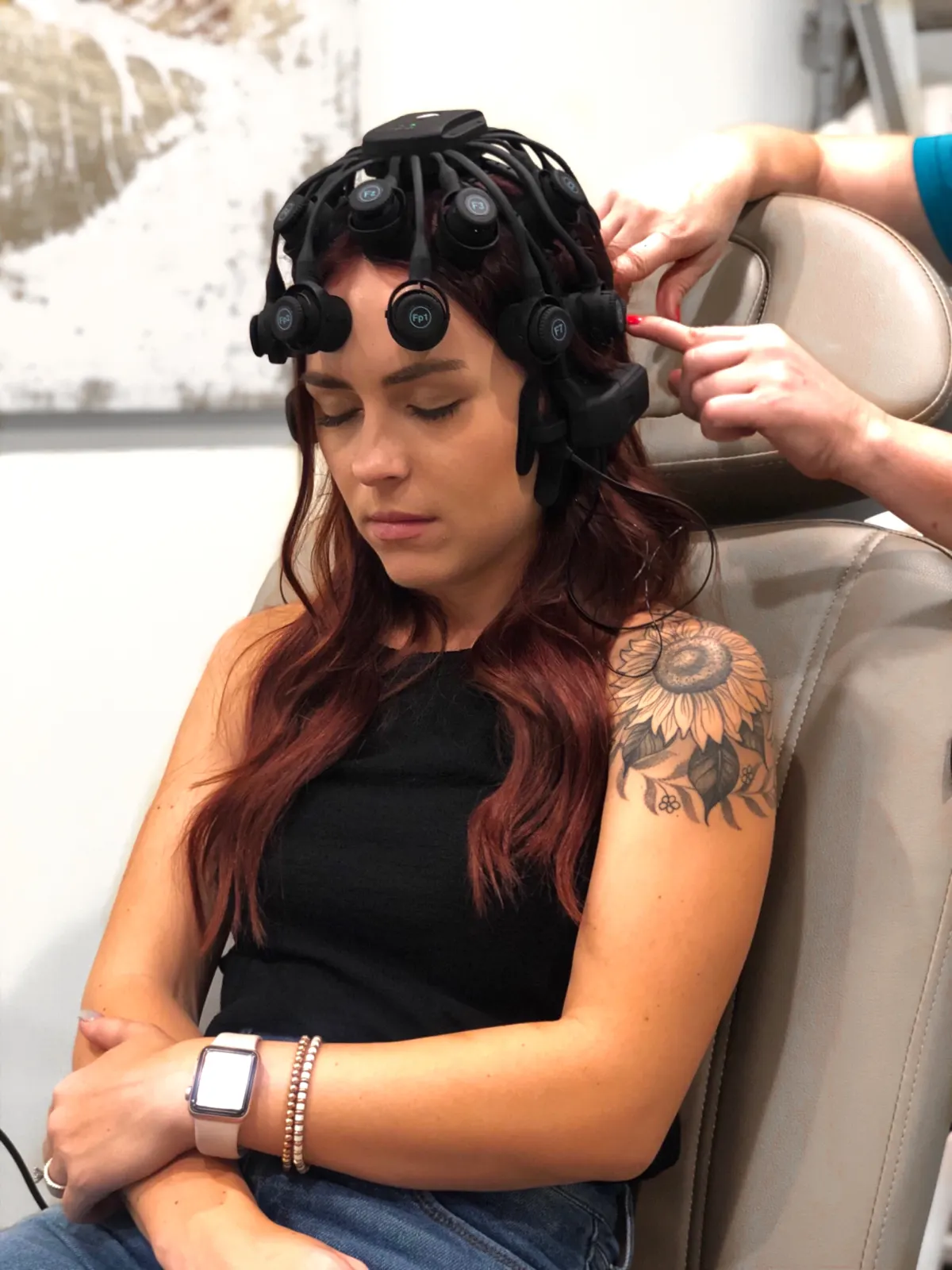
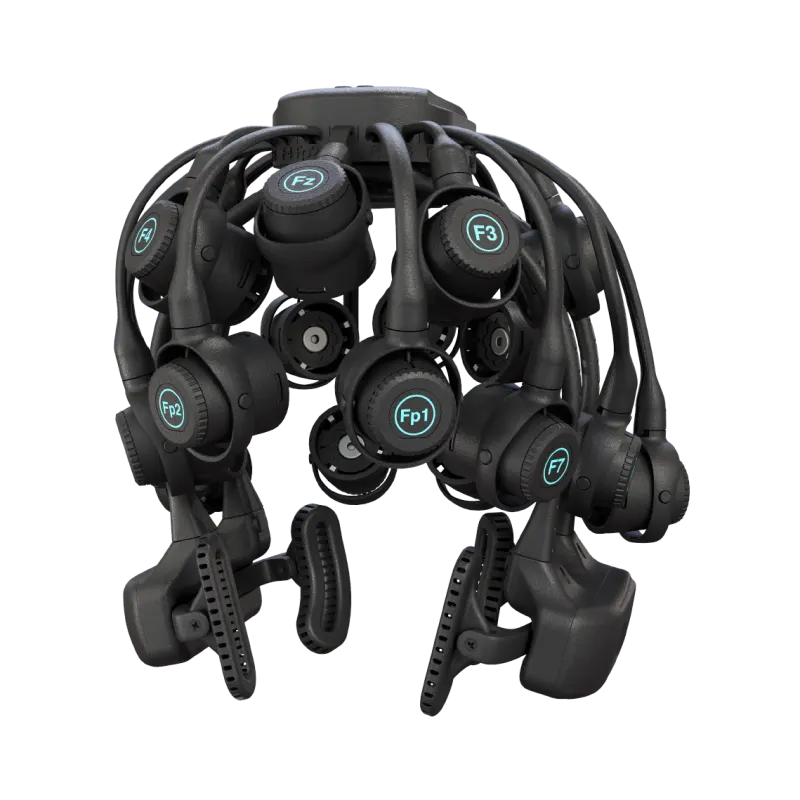
Every neurofeedback protocol at Neuron Connect begins with a qEEG brain map — a non-invasive recording session that captures your brainwave activity across multiple electrode sites. The data is analyzed and compared against a normative database, producing a detailed picture of which frequencies are over- or underactive.
From that map, our clinical team designs a personalized neurofeedback training plan. Most clients complete between 20 and 40 sessions, scheduled two to three times per week, with each session running approximately 30 to 60 minutes. At regular intervals we reassess progress with follow-up qEEG recordings and refine the protocol as your brain responds to training.
Neurofeedback is designed to teach your brain to self-regulate, with the aim that improvements persist after the training period ends rather than requiring ongoing sessions to maintain results.
The information on this page is for educational purposes and is not a substitute for professional medical advice, diagnosis, or treatment. Always consult a qualified healthcare provider about your specific situation.
Data-driven, compassionate care for anxiety and depression.
Our clinical team uses objective brain data to build a personalized neurofeedback protocol designed to help you find lasting balance and resilience.
Attorney-lien friendly. Se Habla Español. Multiple Arizona locations.