Objective brain documentation after a car accident.
After a car accident, a concussion or whiplash-related brain injury often won't appear on a standard CT or MRI. Our qEEG brain mapping provides objective, clinical documentation that may support your treatment and your legal case.
Lien-Based Care
No out-of-pocket cost
Why do MRI and CT scans miss so many concussions?
Standard imaging — CT scans and MRI — examines the structure of the brain: bone, tissue, and bleeding. A concussion rarely tears tissue. Instead, the forces of a collision disrupt the electrical signaling between neurons, altering how brain networks communicate. Because the structure looks intact, the scan reads as normal — even when the patient is experiencing significant symptoms such as headaches, cognitive fog, memory difficulties, and sleep disruption.
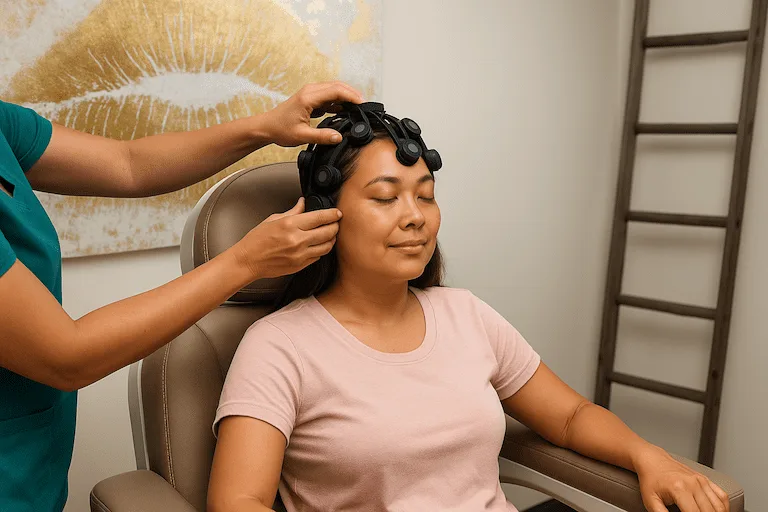
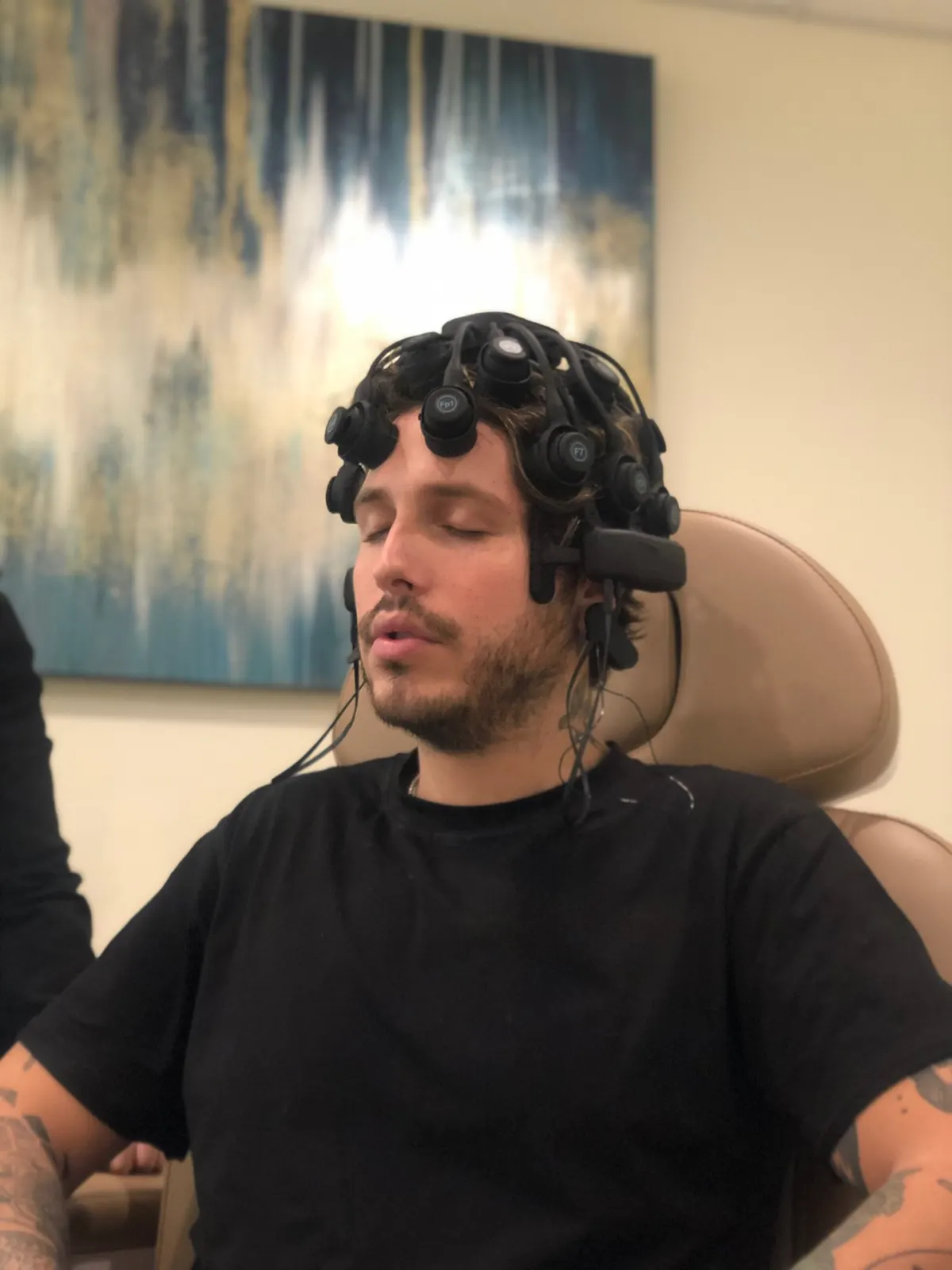
A quantitative EEG (qEEG) brain map measures a different dimension: function. Sensors placed on the scalp record electrical activity across 19 standardized sites simultaneously. That data is compared against age-matched normative databases — revealing patterns such as excess slow-wave activity, altered connectivity, or dysregulation in the executive networks — patterns that do not appear on structural imaging because they represent how the brain communicates, not how it looks.
This distinction matters in two ways. First, it informs treatment: post-concussion neurofeedback can be targeted to the specific networks showing dysregulation, supporting a more personalized recovery plan. Second, it creates an objective, dated record of how the brain was functioning at a specific point in time. A qEEG cannot establish what caused an injury, but it can document the brain's functional state — and that baseline becomes part of the clinical picture that supports both your recovery and your legal case.
Timing is meaningful. Earlier documentation is generally more useful for tracking recovery over time and for building a contemporaneous record. Many patients complete their first qEEG within days of an accident. Our coordinator can discuss what makes sense for your specific situation.
Brain injuries that standard imaging often misses.
After a car accident, a qEEG brain map measures your brainwave activity with clinical precision — revealing injury a CT or MRI can miss — and provides objective data that supports both your recovery plan and your attorney.
Learn about brain mappingConcussion & TBI
Objective qEEG documentation of post-concussion and traumatic brain injury changes after a car accident, supporting both treatment and your legal case.
Whiplash & Neck Trauma
The rapid forces of a collision can injure the brain even when the neck absorbs the impact. Brain mapping captures dysregulation a CT scan can miss.
Post-Concussion Syndrome
Headaches, dizziness, and brain fog that linger for weeks or months after a crash, documented with objective brainwave data.
Cognitive Fog & Memory
Brain mapping pinpoints dysregulation linked to focus, memory, and processing speed after a car accident.
Anxiety & Sleep Disruption
Non-invasive brain training may help restore calmer brainwave patterns disrupted by the trauma of a collision.
Post-Traumatic Stress
Neurofeedback and counseling designed to help regulate the nervous system after a traumatic car accident.
Start care without financial stress.
We have worked with attorneys and personal-injury patients across Arizona. Our coordinator handles every lien detail so you can focus entirely on recovery.
Contact Our Coordinator
Call or fill out the form. We verify your attorney relationship and lien eligibility right away.
Complete Your qEEG Brain Map
A painless, non-invasive assessment that documents brain activity objectively for your case file.
Begin Neurofeedback Therapy
A personalized protocol designed to support recovery from concussion, whiplash, and other car-accident injuries.
We Handle the Paperwork
Our team coordinates directly with your legal team. You focus on healing.
We work directly with your legal team.
No upfront payment required while your case is pending
Our team coordinates documentation directly with your attorney
Objective qEEG brain maps provide clinical evidence for your case file
Experienced with Arizona car-accident and personal-injury cases on a lien basis
We help ensure your recovery is not delayed by financial concerns
What the report gives your attorney
The qEEG clinical report is designed to be both clinically rigorous and attorney-accessible. qEEG findings have been introduced in personal-injury legal cases. We do not guarantee admissibility in any specific proceeding, but our clinical team is available to discuss the report directly with your attorney.
Objective brain map
Color-coded topographic maps of brainwave activity across all 19 recording sites — a visual snapshot of how your brain is functioning at the time of assessment.
Normative comparison
Results are compared to age-matched normative data from the NeuroGuide database, one of the most widely used normative references in quantitative EEG clinical practice.
Plain-language summary
A clinical narrative translating brainwave patterns into functional terms — written to be understood by both clinicians and non-clinical readers such as attorneys and case managers.
Functional documentation
Documents brain function in a way that complements structural imaging such as MRI or CT. Turnaround is typically within days of the assessment — call for current timelines.
Frequently asked questions
- How soon after a car accident should I get a qEEG?
- Many patients are seen within days of an accident. Earlier documentation is generally more useful for establishing a baseline of brain function, but you can still benefit from assessment later in recovery. Contact our coordinator to discuss timing for your specific situation.
- What does the qEEG report show my attorney?
- The report includes an objective, color-coded brain map comparing your brainwave patterns to age-matched normative data from the NeuroGuide database, along with a plain-language clinical summary of functional findings. It complements — rather than replaces — structural imaging such as MRI or CT, and provides objective documentation of brain function at the time of assessment. qEEG has been used in personal-injury legal cases; a coordinator can connect your attorney with our clinical team.
- Will I pay anything out of pocket?
- For personal-injury cases we offer attorney-lien billing: we begin care now and bill the settlement later, so there is no out-of-pocket cost while your case is pending. We also accept most major insurance plans, HSA/FSA funds, and CareCredit for patients without an active PI case.
- How many neurofeedback sessions are typical?
- A general protocol is typically 20 to 40 sessions, though the number is personalized based on your qEEG results and how your brain responds to training. Your clinician will review progress and adjust the plan with you throughout care.
- Do you work directly with my attorney?
- Yes. Our personal-injury coordinator handles documentation requests, lien paperwork, and direct communication with your legal team. You focus on recovery; we handle the coordination.
Ready to document your injury and begin healing?
Our patient coordinator will walk you through the lien process, verify with your attorney, and schedule your first qEEG brain map. No out-of-pocket cost while your case is pending.
Attorney-lien friendly. Se Habla Español. Multiple Arizona locations.