For many families, managing ADHD feels overwhelming. Medication is often the first recommendation—but not everyone wants to rely on prescriptions long-term.
A Drug-Free Approach to ADHD Support
For many families, managing ADHD feels overwhelming. Medication is often the first recommendation—but not everyone wants to rely on prescriptions long-term.
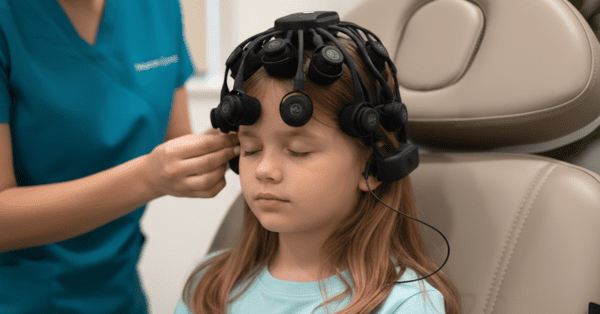
That’s where neurofeedback therapy comes in. This non-invasive, drug-free approach helps train the brain to regulate itself, improving focus, impulse control, and emotional balance.
At Neuron Connect, we use qEEG brain mapping and neurofeedback to create personalized ADHD support plans.
Understanding ADHD and Brainwaves
ADHD is often linked to an imbalance in brainwave activity. Many individuals with ADHD show:
Neurofeedback works by helping the brain increase healthy beta activity while reducing excessive theta patterns.
Over time, the brain learns to stay in a more focused and regulated state—without medication.
Excess theta waves (linked to daydreaming and inattention)
Low beta waves (linked to focus and problem-solving)
How Neurofeedback Helps ADHD Symptoms
Sessions are typically 30–45 minutes, and most clients complete 30–40 sessions for lasting results.
Improves attention and concentration
Reduces impulsive behaviors
Supports emotional regulation
Enhances executive functioning skills
Promotes better sleep patterns
Is Neurofeedback a Replacement for Medication?
For some individuals, neurofeedback becomes a complete alternative. For others, it works alongside medication to enhance results. We explore this question in depth in is neurofeedback a viable alternative to medication? See also our comparison of top neurofeedback benefits for ADHD.
Every brain is different. That’s why Neuron Connect begins with a qEEG brain map to identify each client’s unique patterns before building a treatment plan.
Why Families Choose Neuron Connect
Personalized brain mapping
Drug-free therapy option
Safe for children, teens, and adults
Long-term brain training—not temporary symptom control
Want to explore medication-free ADHD support?
Schedule your brain mapping consultation today at neuron-connect.com
References:
Arns, M., et al. (2009). Neurofeedback Treatment in ADHD: The Effects on Inattention, Impulsivity and Hyperactivity. Clinical EEG and Neuroscience.
Gevensleben, H., et al. (2009). Neurofeedback Training in Children with ADHD: A Randomized Controlled Trial. Journal of Child Psychology and Psychiatry.
Hammond, D. C. (2011). What Is Neurofeedback: An Update. Journal of Neurotherapy.