Car accidents don’t just leave physical injuries—they often leave emotional and neurological scars too. From lingering anxiety and sleep issues to brain fog and chronic pain, many accident survivors struggle long after the crash.
Overview
Car accidents don’t just leave physical injuries—they often leave emotional and neurological scars too. From lingering anxiety and sleep issues to brain fog and chronic pain, many accident survivors struggle long after the crash.
That’s why at Neuron Connect, we offer neurofeedback therapy to help Arizona’s car accident victims regain control, rebuild mental clarity, and heal from the inside out—without relying on medications alone.
What Is Neurofeedback Therapy?
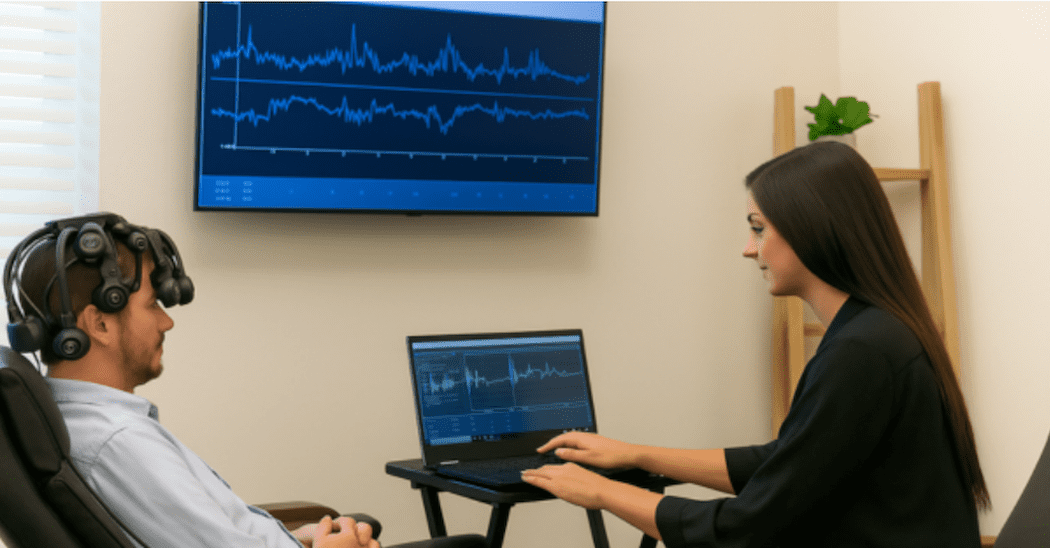
Neurofeedback is a safe, non-invasive brain training method that helps regulate brainwave activity using real-time feedback. Through specialized sensors placed on the scalp, neurofeedback monitors your brain’s electrical signals (also known as brain waves) and provides feedback to help you train your brain to function more efficiently.
This therapy is often guided by a qEEG brain map, which pinpoints areas of dysregulation caused by trauma or injury—allowing your treatment to be fully personalized.
How Car Accidents Affect the Brain
Even if a car crash doesn’t cause visible head trauma, it can still lead to neurological and emotional challenges, such as:
These symptoms are often linked to disrupted brainwave patterns—which is exactly what neurofeedback therapy is designed to help correct.
Post-Traumatic Stress Disorder (PTSD)
Memory problems or cognitive fog
Sleep disturbances
Anxiety or depression
Chronic pain
Top Benefits of Neurofeedback After a Car Accident
Here’s how neurofeedback therapy can support your recovery journey:
1. Relief from PTSD and Emotional Trauma
Accidents can leave deep emotional wounds. Neurofeedback helps:
A review in Frontiers in Psychology found neurofeedback effective in treating PTSD symptoms—even years after trauma.
Reduce hypervigilance, flashbacks, and panic
Regulate stress-related brain activity
Support emotional resilience over time
2. Reduced Anxiety & Depression
It’s common for crash survivors to experience ongoing anxiety, mood swings, or depression. Neurofeedback promotes brainwave balance to:
Calm overactive fight-or-flight responses
Improve emotional stability and mood
Encourage relaxation and restful sleep
3. Cognitive Function Restoration
Struggling with memory, attention, or focus after an accident?
Neurofeedback helps retrain the brain’s executive function centers, improving:
One study in the Journal of Head Trauma Rehabilitation showed improved cognitive performance in TBI patients using neurofeedback.
Short-term and working memory
Processing speed
Focus and attention span
4. Drug-Free Pain Management
Chronic pain is often both a physical and neurological experience. Neurofeedback therapy can help by:
Modulating pain-related brainwave activity
Reducing pain perception without medications
Supporting natural nervous system regulation
Research That Backs It Up
Neurofeedback therapy is supported by decades of clinical research:
Journal of Head Trauma Rehabilitation: Neurofeedback improved memory, attention, and focus in patients with traumatic brain injuries.
Journal of Neuropsychiatry and Clinical Neurosciences: Reduced depression and anxiety symptoms in post-accident survivors.
Frontiers in Psychology: A comprehensive review confirmed neurofeedback’s effectiveness in managing PTSD symptoms.
Why Neuron Connect Is the Right Choice
At Neuron Connect, we specialize in post-accident neurofeedback as part of our personal injury recovery services. Our Arizona-based clinics offer:
Locations in Phoenix, Mesa, Tucson, Scottsdale & more!
✅ Expert neurofeedback practitioners
✅ Advanced qEEG brain mapping technology
✅ Personalized treatment plans based on your injury and symptoms
✅ Flexible payment options, including attorney liens for accident victims
Take Control of Your Recovery Today
You don’t have to live with the lingering effects of a car accident. Whether you’re facing PTSD, chronic pain, or cognitive struggles, neurofeedback therapy offers a powerful, drug-free solution to help you heal and regain your life. Many patients access care through attorney-lien arrangements—no upfront payment required.
Schedule your brain mapping consultation at Neuron Connect today.
References: Schoenberger, N. E., et al. (2001). Neurofeedback Training for TBI: Improvements in Attention and Memory. Journal of Head Trauma Rehabilitation. Peniston, E. G., & Kulkosky, P. J. (1991). Neurofeedback in the Treatment of PTSD. Journal of Clinical Psychology. van der Kolk, B. A., et al. (2016). Neurofeedback as Treatment for PTSD. Frontiers in Psychology.